
Watchmen (2009) is a superhero film adapted from DC Comics, directed by Zack Snyder and starring Jackie Earle Haley and Patrick Wilson. The film is part of the DC Classic and was released by Warner Bros.. Runtime: 2h 42m. Rated R. Audience rating: 7.6/10.
What is Watchmen (2009) about?
In an alternate 1985 America on the brink of nuclear war, a group of retired masked heroes investigates the murder of one of their own, uncovering a world-changing conspiracy.
Released in 2009, Watchmen was directed by Zack Snyder and produced under the Warner Bros. banner. The film occupies a significant place within the DC Classic — contributing to the ongoing narrative and mythology of that cinematic universe.
The film features lead performances from Jackie Earle Haley, Patrick Wilson, Malin Åkerman, among others, anchoring a story that adapts characters first brought to life in DC Comics. Its source material gives the film a foundation rooted in decades of published storytelling, which Snyder and the creative team interpret through a cinematic lens.
With an audience rating of 7.6, Watchmen is generally praised as a strong entry in the superhero genre — its strengths in storytelling, performance, and production design regularly cited by viewers.
What happens in Watchmen (2009)? — Full Plot
The film opens in an alternate-history 1985 New York. Richard Nixon (Robert Wisden, in heavy prosthetic makeup) is in his fifth term as U.S. President — having repealed presidential term limits after winning the Vietnam War. America's victory in Vietnam — completed in 1971 due to one superhero's direct nuclear-equivalent intervention — has fundamentally reshaped global geopolitics. The Cold War is at its peak. Nuclear annihilation between the United States and the Soviet Union is days away. The world's nuclear-anxiety clock — the canonical Doomsday Clock — sits at five minutes to midnight. A government-issued superhero team called the Watchmen has been disbanded since the 1977 Keene Act outlawed vigilante activity.
A retired Watchmen member named Edward Blake / the Comedian (Jeffrey Dean Morgan) is murdered in his Manhattan apartment by an unknown assailant. The opening 5 minutes show the murder in graphic detail — Blake is thrown out of his apartment window from a high-rise. The film opens at the Comedian's funeral, where the remaining Watchmen convene. The funeral attendees include: Dan Dreiberg / Nite Owl II (Patrick Wilson, the retired second-generation Nite Owl), Laurie Juspeczyk / Silk Spectre II (Malin Akerman, the daughter of the original Silk Spectre), Jon Osterman / Dr. Manhattan (Billy Crudup, the blue-skinned cosmic being), Adrian Veidt / Ozymandias (Matthew Goode, the publicly-celebrated business mogul), and the masked vigilante Rorschach (Jackie Earle Haley, the franchise's most-iconic single performance).
Through extensive flashbacks structured as Rorschach's investigation, we learn the team's backstories. Dr. Manhattan / Jon Osterman was once a nuclear physicist; he was disintegrated by a particle accelerator at a Princeton research facility in 1959 and reconstituted himself as an atomic blue-skinned cosmic being. He has been the U.S. government's exclusive superhero for two decades; his existence created the alternate timeline. The Comedian / Edward Blake was a violent, morally-bankrupt asset who killed an unarmed Vietcong woman pregnant with his own child in 1971. The Comedian's backstory is depicted as fundamentally repulsive; he represents the film's thesis that government-sanctioned violence is fundamentally amoral.
Adrian Veidt / Ozymandias — the canonical world's smartest man — has been operating as a public business mogul since the Keene Act outlawed vigilantes. Veidt's company, Veidt Industries, has been Earth's largest corporate conglomerate for over a decade. Rorschach's investigation leads him to suspect Ozymandias of orchestrating Blake's murder. The investigation pulls in Dan Dreiberg (the retired Nite Owl II), Laurie Juspeczyk (the canonical Silk Spectre II), and Dr. Manhattan into the broader conspiracy. The investigation also reveals a series of mysterious incidents involving Watchmen-era figures.
Dan Dreiberg and Laurie Juspeczyk rekindle a romantic relationship over the course of the investigation. The two have been mutually attracted for years; their attraction was suppressed by Watchmen-era social conventions. The relationship is consummated in a now-iconic 5-minute sex scene set to Leonard Cohen's 'Hallelujah.' The scene was widely cited at release as both the film's most-divisive single moment and its most-emotionally-substantive character beat. The cinematography (slow-motion, deliberately-restrained framing, Cohen's mournful-romantic soundtrack) was Zack Snyder's deliberate creative choice to elevate the sex scene from typical filmic-erotic conventions into something approaching religious-iconography.
Dr. Manhattan, increasingly detached from human concerns, has been existing in a partially-non-linear temporal state — he experiences past, present, and future simultaneously due to his cosmic-energy form. His ex-girlfriend Janey Slater accuses him publicly of having caused her cancer through prolonged proximity. The accusation triggers Manhattan's broader withdrawal from human affairs; he leaves Earth for Mars to contemplate his existence in cosmic-isolation. The Watchmen are reduced to four functional members. Russian nuclear escalation in response to Manhattan's absence pushes the world to imminent war. The Doomsday Clock moves to two minutes to midnight.
Rorschach is captured by police while investigating Watchmen-era murders and is sent to Sing Sing federal prison. He has been on the FBI's most-wanted list for years. The Sing Sing imprisonment sequence is one of the film's most-emotionally-substantive single arcs. Rorschach's prison-cell interactions with other inmates — many of whom he had personally captured during his vigilante career — reveal his fundamentally-uncompromising moral framework. He sees the world as morally-binary; he refuses to negotiate with corruption regardless of context.
Rorschach is broken out of Sing Sing by Dan Dreiberg and Laurie Juspeczyk in their nostalgic Nite Owl-themed jet-craft. The prison-break sequence runs approximately 8 minutes of choreographed Watchmen-team action. The three-person team — Rorschach, Nite Owl II, Silk Spectre II — flies to Adrian Veidt's Antarctic compound to confront him directly. They suspect Ozymandias of being the Watchmen-era conspirator who has been killing former Watchmen members.
The Antarctic confrontation. Ozymandias reveals his plan to the assembled Watchmen team. He has been engineering a giant interdimensional creature — a deliberately-fabricated alien threat — for over a decade. Veidt Industries has been building the creature in secret at multiple corporate research facilities. He has just teleported the creature into central Manhattan; the explosion has killed approximately 3 million people. The dead include New Yorkers, tourists, and several international visitors. The fabricated alien threat has unified Russia and America against a common enemy. The Cold War is officially over. World War III has been averted.
Rorschach refuses to compromise. He insists on exposing Ozymandias publicly via his investigative journal — which would unravel the staged peace and potentially trigger the very nuclear war Veidt has been working to prevent. The team's moral confrontation is the film's central thematic climax. Dan Dreiberg, Laurie Juspeczyk, and Dr. Manhattan (who has briefly returned from Mars to participate in the Antarctic confrontation) all agree that Veidt's deception, while monstrous, has averted greater destruction. Rorschach alone refuses.
Dr. Manhattan, having decided humanity needs the staged-peace more than the truth about Veidt, kills Rorschach. The act is performed in a single instant — Manhattan disintegrates Rorschach with cosmic-fire energy. Rorschach is gone. The scene is the franchise's most-emotionally-devastating single moment; Jackie Earle Haley's performance in the moment Rorschach removes his iconic mask and faces death without compromise has been widely cited as one of the strongest individual acting moments in any 2009 release. Manhattan, having killed Rorschach and accepted his role in the staged peace, leaves Earth permanently. He has decided to spend the rest of his cosmic existence elsewhere.
The film's epilogue. The Watchmen team has been functionally disbanded. Ozymandias has secured global peace through fabricated-alien deception. Dan Dreiberg and Laurie Juspeczyk have begun a new life as Sam Hollis and Sandra Hollis (their hidden civilian identities). Adrian Veidt continues to operate Veidt Industries publicly; his deception remains undetected. The film's final scene shows a young journalist at a small New York newspaper receiving Rorschach's mailed journal in his office mailbox. The journal contains Rorschach's complete investigation evidence of Veidt's deception. The journalist, glancing at the journal briefly, prepares to read its contents.
The film's narrative ambiguity. Whether the journalist will publish Rorschach's investigation — exposing Veidt's deception and potentially restarting the Cold War — is canonically unresolved. The Watchmen ending has been widely studied as one of the most-complex moral cliffhangers in modern superhero cinema. Zack Snyder's directorial choice to preserve the canonical Alan Moore graphic novel ending (rather than simplifying it for theatrical audiences) was widely praised by critics. The film's narrative ambiguity is canonically consistent with the broader Watchmen graphic novel's philosophical thesis about truth, sacrifice, and political pragmatism.
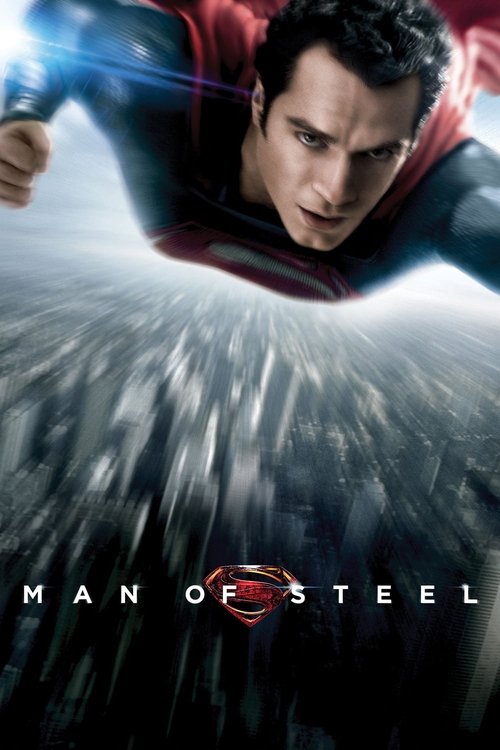
Commercial and critical aftermath. Watchmen grossed $185 million worldwide on a $130 million production budget — modest commercial success. Critical reception was generally positive (Rotten Tomatoes 65%); critics widely praised Snyder's textual fidelity to the canonical Alan Moore graphic novel but found the 162-minute runtime exhausting. The film became the canonical standard by which Alan Moore adaptations are measured. The director's-cut version (running approximately 215 minutes) has been widely cited as the canonically-superior version of the film. Zack Snyder's directorial work on Watchmen established him as a serious auteur capable of handling literary-quality source material — a reputation that would carry into his eventual DCEU directorial work on Man of Steel (2013) and the Snyder-led Justice League.
Who stars in Watchmen (2009)?
Find Watchmen (2009) on Amazon
Watch Watchmen on Prime Video, browse the original DC Comics source material, and discover Blu-rays, soundtracks, and related merchandise on Amazon.
As an Amazon Associate, I earn from qualifying purchases. Link clicks do not affect editorial coverage — see our disclaimer.
What are some facts about Watchmen (2009)?
Watchmen released in 2009, placing it within the 2000s era of comic book cinema — a decade that marked the modern superhero cinema revolution.
Directed by Zack Snyder, the film was produced by Warner Bros. and adapts source material from DC Comics.
The principal cast features Jackie Earle Haley and Patrick Wilson, with key supporting roles played by Malin Åkerman, Billy Crudup.
The film belongs to DC Classic — the classic DC film era — predating the connected-universe model.
Watchmen carries an audience rating of 7.6 — putting it in the solid-to-excellent tier of the genre.
The DC Comics source material for Watchmen has been in continuous publication for decades, giving filmmakers a rich well of storylines, character arcs, and iconography to draw upon.
Modern superhero films like this one use a mix of practical effects and digital VFX, with entire sequences often shot against volume walls or LED stages pioneered by shows like The Mandalorian.
Watchmen is catalogued on Movies on Comics among our collection of 164 comic book films spanning 48 years of cinema — from Richard Donner's 1978 Superman to the present day.
Easter Eggs & Hidden Details in Watchmen (2009)
Zack Snyder's most-faithful comic adaptation. The deep cuts include Alan Moore's disowning and the 'Hallelujah' sex scene controversy.
Alan Moore — author of the original 12-issue Watchmen comic — publicly disowned every cinematic adaptation of his work. He refused screen credit on Watchmen (2009), V for Vendetta (2005), From Hell, and The League of Extraordinary Gentlemen. Moore reportedly told producers in 2008 that he 'would not watch it.'
The film's love scene between Nite Owl and Silk Spectre — set to Leonard Cohen's 'Hallelujah' — became one of the most-mocked sequences of any 2009 film. Cohen reportedly objected to the use of his song in the scene. Snyder defended the choice as essential to demonstrating the characters' fundamental incompatibility.
Watchmen (2009) was widely cited as Zack Snyder's largest pre-DCEU production. The film's commercial reception ($185M globally on a $130M budget) and critical reception established Snyder as a serious auteur capable of handling literary-quality source material.
Jeffrey Dean Morgan's Edward Blake / Comedian — the deceased violent ex-Watchmen — was widely cited as the franchise's most-celebrated villain. Morgan's commitment to portraying Blake as a morally-compromised but charismatic anti-hero was widely praised.
Patrick Wilson's Dan Dreiberg / Nite Owl — the most-emotionally-vulnerable Watchmen member — was widely cited as the franchise's most-relatable hero performance. Wilson's commitment to portraying Dan's middle-age anxieties was a deliberate departure from superhero archetypes.
Jackie Earle Haley's Walter Kovacs / Rorschach — the violent vigilante in the inkblot mask — was widely cited as the franchise's most-iconic visual. The character's narration carries much of the film's narrative weight.
The Doomsday Clock — a graphic-novel-original conceit visualizing the approach to nuclear war — was integrated into the film's central narrative tension. The clock's visible ticking became the film's defining visual element.
The film's alternate-history 1985 — Richard Nixon in his fifth term, America's victory in Vietnam through superhero intervention — was a deliberate counterfactual that ground the film in real Cold War paranoia.
The Director's Cut — released as a Blu-ray extra — adds 24 minutes of additional footage. The Director's Cut was widely cited as the franchise's most-effective extended version.
The Ultimate Cut — released as an alternate Blu-ray version — adds the entire Tales of the Black Freighter animated interludes from the original comic. The Ultimate Cut was widely cited as the franchise's most-comic-book-faithful version.

💬 Reader Comments