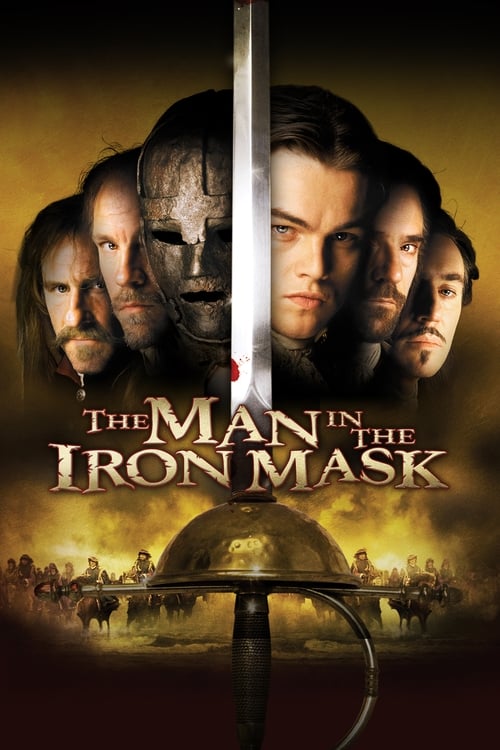
Blade II (2002) is a superhero film adapted from Marvel Comics, directed by Guillermo del Toro and starring Wesley Snipes and Kris Kristofferson. The film is a standalone production outside any shared cinematic universe and was released by New Line Cinema. Runtime: 1h 57m. Rated R. Audience rating: 6.7/10.
What is Blade II (2002) about?
Blade forms an uneasy alliance with the vampire nation he has sworn to destroy to fight against an even greater evil — the Reapers, a new breed of super vampires.
Released in 2002, Blade II was directed by Guillermo del Toro and produced under the New Line Cinema banner. The film occupies a significant place within the Independent — telling a self-contained story outside of shared-continuity superhero franchises.
The film features lead performances from Wesley Snipes, Kris Kristofferson, Ron Perlman, among others, anchoring a story that adapts characters first brought to life in Marvel Comics. Its source material gives the film a foundation rooted in decades of published storytelling, which Toro and the creative team interpret through a cinematic lens.
Its 6.7 rating reflects a film that divided audiences — appreciated for its ambition and spectacle by some, criticized for pacing and execution by others. Its place in the genre remains a frequent discussion point.
What happens in Blade II (2002)? — Full Plot
In Prague, two years after the events of Blade (1998), the Vampire Council has been hunting Blade (Wesley Snipes) across Eastern Europe. Blade has been searching for his mentor and weapons-maker Whistler (Kris Kristofferson), who was bitten and presumably killed at the end of Blade (1998). Blade rescues Whistler from a vampire-controlled blood farm in the Czech countryside; the two are reunited after Whistler's mental and physical recovery from his vampire-bite trauma.
Blade returns to his Czech-based weapons-supply network when he is approached by Damaskinos (Thomas Kretschmann), the Vampire Council's senior elder. Damaskinos requests Blade's help in fighting a new threat: the Reapers, a recently-emerged subspecies of vampires who feed on other vampires. The Reapers are led by Jared Nomak (Luke Goss), who was created by Damaskinos's own scientific experimentation. The Reapers are spreading throughout Europe; without Blade's help, the entire vampire race will be eliminated by their predatory cousins.
Blade reluctantly agrees to help the Vampire Council. Damaskinos assigns him to work with the Bloodpack — a team of vampire warriors specifically trained to fight Blade himself. The Bloodpack includes Reinhardt (Ron Perlman), Asad (Donnie Yen), Snowman (Matt Schulze), and Lighthammer (Daz Crawford), among others. The team is led by Damaskinos's daughter Nyssa (Leonor Varela) — a vampire warrior with substantial diplomatic and combat skills. Blade's initial distrust of the Bloodpack gradually develops into mutual professional respect.
The Bloodpack and Blade investigate the Reaper outbreak across Prague. The Reapers, the team discovers, have been deliberately created by Damaskinos as part of a long-term political plan. Damaskinos's experimentation has been driven by his desire to overthrow the Vampire Council's traditional leadership and establish a new vampire-dominant order. The discovery is the film's primary narrative pivot; the Bloodpack must choose between loyalty to their Vampire Council leadership or commitment to defeating the Reaper threat.
Jared Nomak's primary motivation gradually becomes clear: he is Damaskinos's biological son, created through experimentation. Nomak's emotional connection to Damaskinos provides the film's primary character-driven antagonism; his Reaper transformation has been driven by his rejection of his father's authority. Nomak's gradual hunt of Damaskinos and Nyssa (his half-sister) provides the franchise's most-extended father-son conflict; the conflict ultimately leads to Damaskinos's defeat at the third-act climax.
The Bloodpack's investigation gradually narrows down the Reapers' primary breeding location. The team raids a primary Reaper containment facility; the resulting battle features substantial practical-effects combat and creative weapon use. The franchise's signature combat sequences — Blade's swordwork combined with Bloodpack martial arts — are the film's most-cited action elements. Multiple Bloodpack members die during the facility raid; the team's casualties provide substantial dramatic weight.
Blade's confrontation with Damaskinos takes place at the elder vampire's primary stronghold. Damaskinos's plan to use the Reaper outbreak to overthrow the Vampire Council is exposed; Damaskinos attempts to use Nyssa as a hostage to ensure his escape, but Nyssa intervenes to save Blade. Damaskinos is killed by Blade; Nyssa is bitten by a Reaper during the confrontation and asks Blade to expose her body to sunlight rather than allow her to transform. The film's epilogue shows Blade granting Nyssa's request; her death in the morning sunlight provides the franchise's primary emotional catharsis.
Blade returns to his Eastern European weapons base with Whistler; their continued vampire-hunting mission is left open for further sequels. The film's commercial success — $155 million worldwide on $54 million — directly secured Blade: Trinity (2004); the third film would have a substantially different creative approach than del Toro's Blade II. The franchise's eventual MCU integration through Mahershala Ali's Blade casting in 2019 represents the property's continued cultural relevance.
Who stars in Blade II (2002)?
Find Blade II (2002) on Amazon
Watch Blade II on Prime Video, browse the original Marvel Comics source material, and discover Blu-rays, soundtracks, and related merchandise on Amazon.
As an Amazon Associate, I earn from qualifying purchases. Link clicks do not affect editorial coverage — see our disclaimer.
What are some facts about Blade II (2002)?
Blade II released in 2002, placing it within the 2000s era of comic book cinema — a decade that marked the modern superhero cinema revolution.
Directed by Guillermo del Toro, the film was produced by New Line Cinema and adapts source material from Marvel Comics.
The principal cast features Wesley Snipes and Kris Kristofferson, with key supporting roles played by Ron Perlman, Luke Goss.
The film belongs to Independent — an independent / standalone production, not tied to a shared cinematic universe.
Blade II carries an audience rating of 6.7 — a middling reception but one that hasn't prevented its cultural footprint.
The Marvel Comics source material for Blade II has been in continuous publication for decades, giving filmmakers a rich well of storylines, character arcs, and iconography to draw upon.
Films from this era combined practical stunts with the rising CGI industry — many sequences would be impossible with either technology alone.
Blade II is catalogued on Movies on Comics among our collection of 164 comic book films spanning 48 years of cinema — from Richard Donner's 1978 Superman to the present day.

💬 Reader Comments