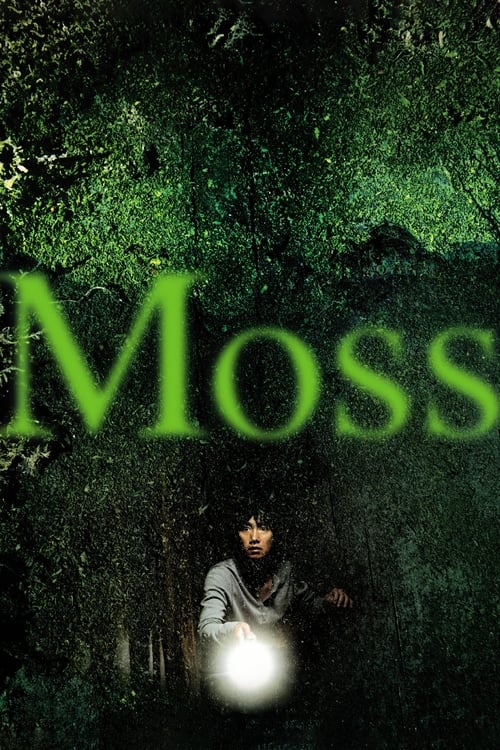
Moss (2010) is a Korean-language superhero film adapted from Manga, directed by Kang Woo-seok and starring Park Hae-il and Jung Jae-young. The film is a standalone production outside any shared cinematic universe and was released by Showbox. Audience rating: 7.5/10.
What is Moss (2010) about?
A man travels to a remote village to claim his father's body and discovers a secretive, deeply corrupt community controlled by an iron-fisted elder. Based on Yoon Tae-ho's acclaimed manhwa.
Released in 2010, Moss was directed by Kang Woo-seok and produced under the Showbox banner. The film occupies a significant place within the Independent — telling a self-contained story outside of shared-continuity superhero franchises.
The film features lead performances from Park Hae-il, Jung Jae-young, Yoo Hae-jin, anchoring a story that adapts characters first brought to life in Manga. Its source material gives the film a foundation rooted in decades of published storytelling, which Woo-seok and the creative team interpret through a cinematic lens.
With an audience rating of 7.5, Moss is generally praised as a strong entry in the superhero genre — its strengths in storytelling, performance, and production design regularly cited by viewers.
What happens in Moss (2010)? — Full Plot
Yoo Hae-guk (Park Hae-il) arrives in a remote South Korean mountain village to handle his deceased father's funeral arrangements. His father had been a devout religious figure with a following in the village; Hae-guk has been estranged from his father for over a decade and barely knows the community. The village is led by Cheon Yong-deok (Jung Jae-young), a charismatic elder who controls the village's economic and social affairs through his personal authority.
Hae-guk's initial impression of the village is unsettling. The villagers are universally deferential to Cheon, but their behavior seems performative rather than genuine. Hae-guk's father's house has been carefully cleaned and arranged — almost too perfectly — and personal items appear to have been removed. As he investigates, Hae-guk discovers his father's hidden notebooks containing cryptic notes about the village's criminal history.
Detective Park Min-wook (Yoo Hae-jin) arrives in the village to assist Hae-guk's investigation. Park has been investigating Cheon's criminal background for years but has been unable to establish prosecutable evidence. The detective-civilian partnership becomes the film's primary investigative dynamic; their gradual uncovering of the village's secrets provides dramatic weight.
The investigation gradually reveals that Cheon has been responsible for multiple murders over the past three decades. His victims included villagers who threatened to expose his criminal activities; their bodies were buried in the village's surrounding forest. The scale of Cheon's crimes is the franchise's primary plot revelation; the village's deferential behavior is revealed to be fear rather than genuine respect.
Cheon discovers Hae-guk's investigation. The third-act confrontation features cat-and-mouse pursuit through the village's remote forest locations; Cheon's knowledge of the terrain provides tactical advantage. The confrontation tests Hae-guk's commitment to exposing the truth at the personal cost; multiple allies are killed during the pursuit.
Hae-guk eventually exposes Cheon's criminal history publicly. Cheon is arrested by Korean federal authorities; the village's community is forced to confront its complicity in his criminal activities. The film's epilogue shows Hae-guk preparing to leave the village permanently; his commitment to honoring his deceased father's moral integrity is the franchise's primary character-development climax.
Who stars in Moss (2010)?
Find Moss (2010) on Amazon
Watch Moss on Prime Video, browse the original Manga source material, and discover Blu-rays, soundtracks, and related merchandise on Amazon.
As an Amazon Associate, I earn from qualifying purchases. Link clicks do not affect editorial coverage — see our disclaimer.
What are some facts about Moss (2010)?
Moss released in 2010, placing it within the 2010s era of comic book cinema — a decade that saw superhero films become the dominant force at the global box office.
Directed by Kang Woo-seok, the film was produced by Showbox and adapts source material from Manga.
The principal cast features Park Hae-il and Jung Jae-young, with key supporting roles played by Yoo Hae-jin.
The film belongs to Independent — an independent / standalone production, not tied to a shared cinematic universe.
Moss carries an audience rating of 7.5 — putting it in the solid-to-excellent tier of the genre.
The Manga source material for Moss has been in continuous publication for decades, giving filmmakers a rich well of storylines, character arcs, and iconography to draw upon.
Modern superhero films like this one use a mix of practical effects and digital VFX, with entire sequences often shot against volume walls or LED stages pioneered by shows like The Mandalorian.
Moss is catalogued on Movies on Comics among our collection of 164 comic book films spanning 48 years of cinema — from Richard Donner's 1978 Superman to the present day.



💬 Reader Comments