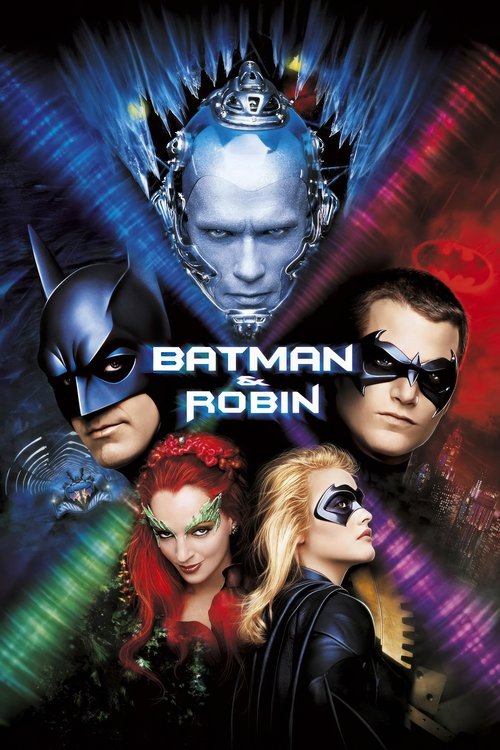
Batman & Robin (1997) is a superhero film adapted from DC Comics, directed by Joel Schumacher and starring George Clooney and Arnold Schwarzenegger. The film is part of the DC Classic and was released by Warner Bros.. Audience rating: 3.7/10.
What is Batman & Robin (1997) about?
Batman and Robin try to keep their partnership together while battling a pair of new villains: the cold-hearted Mr. Freeze and the seductive botanist Poison Ivy.
Released in 1997, Batman & Robin was directed by Joel Schumacher and produced under the Warner Bros. banner. The film occupies a significant place within the DC Classic — contributing to the ongoing narrative and mythology of that cinematic universe.
The film features lead performances from George Clooney, Arnold Schwarzenegger, Uma Thurman, among others, anchoring a story that adapts characters first brought to life in DC Comics. Its source material gives the film a foundation rooted in decades of published storytelling, which Schumacher and the creative team interpret through a cinematic lens.
The film's 3.7 audience rating indicates a mixed response. Even so, it holds interest as part of the broader DC Classic catalogue and for how it fits into the lineage of DC Comics-based cinema.
What happens in Batman & Robin (1997)? — Full Plot
The film opens in Gotham City with Batman (George Clooney) and Robin (Chris O'Donnell) responding to a robbery at Gotham Museum, where the supervillain Mr. Freeze (Arnold Schwarzenegger) has been stealing high-value diamond artifacts. Mr. Freeze's freeze-gun technology can lower environmental temperatures to absolute-zero levels, instantly freezing combat opponents and creating tactical-advantage ice obstacles. His physical body is contained within a refrigerated combat suit; he requires sub-zero temperatures for biological survival following his original transformation accident. The opening action sequence introduces Schumacher's signature visual-aesthetic choices: neon-lit Gotham architecture, costume-prominence over character-physiology, and stylized hyper-real combat choreography.
Mr. Freeze's tragic backstory is delivered through extended flashback during the opening sequence. He was once Dr. Victor Fries, a Gotham research scientist whose wife Nora suffered from a rare-terminal disease called MacGregor's Syndrome. Dr. Fries's experimental cryogenic-preservation research was intended to keep Nora alive in suspended animation until a cure could be developed. A catastrophic laboratory accident during the procedure froze Nora's body permanently while transforming Fries's own biology into the cryogenically-dependent supervillain. Mr. Freeze's continued criminal operations are funded by his diamond-theft campaigns; the diamonds power his combat suit's cryogenic systems and his ongoing pursuit of a cure for Nora.
A parallel introduction establishes the picture's secondary antagonist Pamela Isley (Uma Thurman), a brilliant botanist working at the Wayne Enterprises-funded research facility in Brazil. Isley's research focuses on plant-animal hybrid biology with the long-term goal of creating ecosystem-balancing organisms. Her supervisor Dr. Jason Woodrue (John Glover) has been secretly using her research to develop super-soldier-augmentation procedures for criminal-organization buyers. Isley's discovery of Woodrue's misuse of her work produces a confrontation in which Woodrue attempts to kill her by exposing her to her own plant-biology experimental materials. The exposure transforms Isley into Poison Ivy, a plant-human hybrid with pheromone-control abilities and toxic-physiology.
Poison Ivy's emergence is paralleled by the unwanted creation of a second botanically-altered being: Bane (Jeep Swenson), a maximum-security prison inmate who has been subjected to Woodrue's super-soldier augmentation procedure. Bane's transformed body has been chemically-enhanced for absolute physical strength but his cognitive capacities have been diminished to near-monosyllabic-command level. Poison Ivy adopts Bane as her primary muscle and travels to Gotham City with the dual objectives of avenging herself on Wayne Enterprises (whose facility-funding had supported Woodrue's operations) and pursuing her broader plant-supremacist political agenda.
Bruce Wayne's civilian life has been disrupted by the unexpected arrival of his butler Alfred Pennyworth's (Michael Gough) niece Barbara Wilson (Alicia Silverstone) at Wayne Manor. Barbara is a college student visiting her uncle during summer break. Her presence at Wayne Manor produces immediate friction with both Bruce and Dick Grayson; Dick's interest in Barbara's romantic potential complicates the household dynamics. Alfred's continued health is also revealed as deteriorating; he is suffering from the same MacGregor's Syndrome that has afflicted Mr. Freeze's wife, providing the picture with a parallel mortality-theme that connects the heroes and villains through shared human-suffering.
Poison Ivy's plant-pheromone abilities are used systematically against Bruce Wayne and Dick Grayson, both of whom develop romantic-physical attraction to her despite their civilian-attachment commitments. Her manipulation drives a wedge between Bruce and Dick, with each man competing for Ivy's attention without recognizing her pheromonal manipulation. Ivy's strategic intention is to weaken Batman-and-Robin's partnership before her broader plant-supremacist plan can be deployed. The film's middle act follows the gradual erosion of trust between Bruce and Dick and their eventual realization of Ivy's manipulation through the recovery of their own emotional clarity.
Mr. Freeze and Poison Ivy form an unstable alliance during the middle act. Ivy intends to use Freeze's cryogenic-environmental-modification capabilities to lower Gotham's atmospheric temperature to plant-supremacy-favorable levels (in which her plant-control abilities will dominate the diminished animal-and-human populations). Freeze intends to use Ivy's botanical-toxin synthesis capabilities to refine the MacGregor's Syndrome cure he has been developing for his wife Nora. Their tactical cooperation is fragile; Ivy's eventual betrayal of Freeze (she attempts to terminate Nora's suspended-animation life-support to deny Freeze his cure) becomes the film's third-act narrative pivot.
Barbara Wilson's emergence as Batgirl is the film's primary new-character throughline. Her own discovery of Alfred's secret keeper-of-Wayne-Manor-Cave knowledge leads her to access the cave directly and adopt her own vigilante identity. Her Batgirl costume, fully-equipped within the cave's stored prototypes, allows her to join the Batman-Robin partnership for the third-act confrontation. The expanded team's coordinated assault on the villains' planned operations becomes the picture's central action setpiece.
The film's third-act extended action sequence takes place at Mr. Freeze's secret Gotham Observatory base, where Freeze has been preparing to deploy his cryogenic-environmental-modification device through the observatory's telescope. The deployment will cover Gotham in atmospheric-freezing conditions that will allow Poison Ivy's plant supremacy to dominate. Batman, Robin, and Batgirl's coordinated assault on the facility succeeds in disrupting the deployment and reaching the central control system in time to reverse the effects. Mr. Freeze, having realized Ivy's betrayal of Nora, switches sides during the engagement and provides the team with the synthesized cure for MacGregor's Syndrome.
The film's epilogue establishes the new status quo. Mr. Freeze is delivered to Arkham Asylum, where he shares a cell with the captured Poison Ivy as part of a deliberately-cruel mutual-isolation punishment. The cure for MacGregor's Syndrome is administered to Alfred Pennyworth, who is restored to functional health. Nora Fries's suspended-animation body is preserved at Arkham. Batman, Robin, and Batgirl ride off into the Gotham night as the expanded vigilante team. Batman & Robin grossed $238 million globally on a $125 million budget, an unprecedented commercial-and-critical disappointment that effectively ended the Schumacher-Burton continuity. Director Joel Schumacher subsequently apologized publicly for the picture's quality, an unusual gesture in Hollywood. The franchise was placed in dormancy for nearly a decade before Christopher Nolan's Batman Begins (2005) successfully rebooted the property in a substantially-different creative direction.
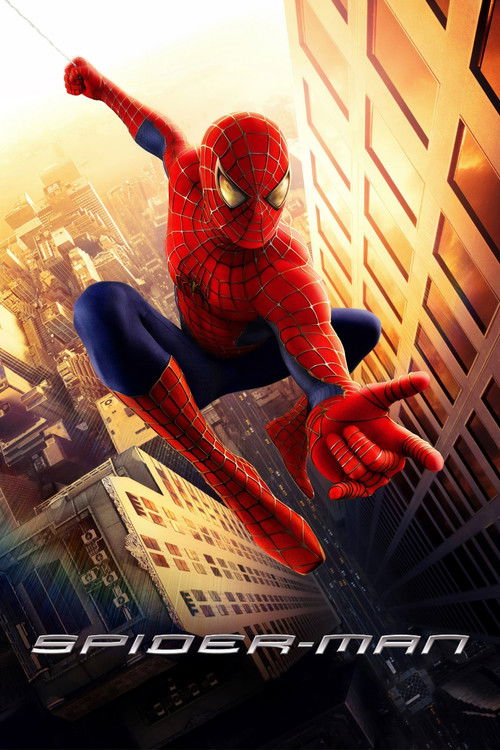
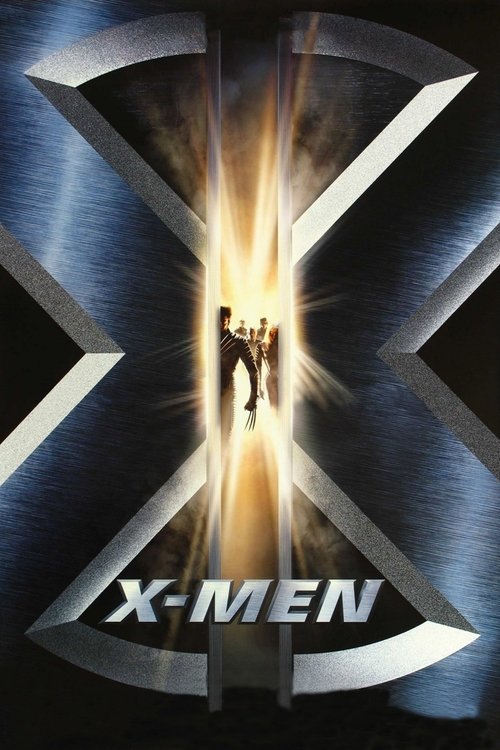
Arnold Schwarzenegger's Mr. Freeze performance was widely criticized at the time of release for its excessive deployment of ice-themed puns and one-liners; Schwarzenegger himself acknowledged in subsequent interviews that the role required him to focus on the picture's broader-comedic register rather than on dramatic character development. Uma Thurman's Poison Ivy performance, although praised for its physical commitment, was widely criticized as one of the picture's most-discussed missteps; the character's intended sex-symbol positioning conflicted awkwardly with her plant-supremacist political ideology. The casting of Alicia Silverstone as Batgirl, riding the post-Clueless commercial-success momentum of her career, was widely cited as evidence of the production's marketing-driven casting decisions. The picture's commercial failure had long-term industrial consequences: it effectively halted Hollywood's commitment to comic-book-genre productions for nearly a decade and contributed to the genre's reputation as commercially unreliable until X-Men (2000) and Spider-Man (2002) reset audience expectations. George Clooney's Batman performance, while widely criticized at the time of release, was subsequently re-evaluated by some critics as a competent interpretation undermined by the picture's broader screenplay weaknesses; Clooney himself has publicly joked about the role in subsequent interviews and made a brief cameo as Bruce Wayne in The Flash (2023).
Who stars in Batman & Robin (1997)?
What are some facts about Batman & Robin (1997)?
Batman & Robin released in 1997, placing it within the 1990s era of comic book cinema — a decade that experimented with tone and visual effects, paving the way for the modern era.
Directed by Joel Schumacher, the film was produced by Warner Bros. and adapts source material from DC Comics.
The principal cast features George Clooney and Arnold Schwarzenegger, with key supporting roles played by Uma Thurman, Alicia Silverstone.
The film belongs to DC Classic — the classic DC film era — predating the connected-universe model.
Batman & Robin carries an audience rating of 3.7 — a mixed reception that highlights the divisive nature of superhero film adaptations.
The DC Comics source material for Batman & Robin has been in continuous publication for decades, giving filmmakers a rich well of storylines, character arcs, and iconography to draw upon.
Earlier comic book films relied heavily on physical sets, miniatures, and in-camera effects — the VFX approach modern audiences take for granted had not yet matured.
Batman & Robin is catalogued on Movies on Comics among our collection of 163 comic book films spanning 48 years of cinema — from Richard Donner's 1978 Superman to the present day.