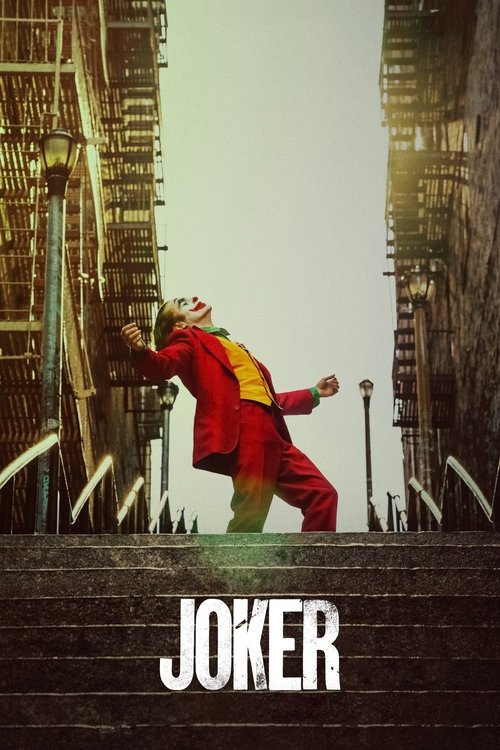
Joker (2019) is a superhero film adapted from DC Comics, directed by Todd Phillips and starring Joaquin Phoenix and Robert De Niro. The film is a standalone production outside any shared cinematic universe and was released by Warner Bros.. Runtime: 2h 2m. Rated R. Audience rating: 8.4/10.
What is Joker (2019) about?
Arthur Fleck, a failed comedian and abused outsider in a decaying Gotham City, descends into madness and reinvents himself as the Joker — sparking a violent uprising and becoming the symbol of a city in revolt.
Released in 2019, Joker was directed by Todd Phillips and produced under the Warner Bros. banner. The film occupies a significant place within the Independent — telling a self-contained story outside of shared-continuity superhero franchises.
The film features lead performances from Joaquin Phoenix, Robert De Niro, Zazie Beetz, among others, anchoring a story that adapts characters first brought to life in DC Comics. Its source material gives the film a foundation rooted in decades of published storytelling, which Phillips and the creative team interpret through a cinematic lens.
With an audience rating of 8.4, Joker is generally praised as a strong entry in the superhero genre — its strengths in storytelling, performance, and production design regularly cited by viewers.
What happens in Joker (2019)? — Full Plot
1981. Gotham City, mid-garbage-strike. Rats in the gutters. Trash bags piling up on the sidewalks. A radio plays Pleasant Valley Sunday. Arthur Fleck sits in a windowless dressing room in front of a fluorescent mirror painting clown makeup onto his face for a low-rent rental service that sends him out to do sidewalk sign-spinning for going-out-of-business sales. Arthur is forty, lean to the point of malnourished, with a hollow chest and pale watery eyes and a head of straggly hair he keeps trying to slick back. He has a medical condition called pseudobulbar affect — he laughs uncontrollably in moments of stress, anxiety, or pain. The laugh is a wheezing, painful bark that sounds like he's drowning. He carries a laminated index card that he hands to strangers when it starts. "Forgive my laughter. I have a condition." He's been on seven different medications for seven different conditions, prescribed by an exhausted city social worker he sees once a week.
On Day One of the film, Arthur is sign-spinning outside a Kenny's Music Storefront when a group of teenagers steal his sign and run. He chases them into an alley. They beat him bloody with the sign on the pavement, kick him in the ribs, take his last dollar. He limps back to his mother Penny's tiny third-floor apartment in the East Bronx with bruises on his ribs and a black eye. Penny is sixty-something, frail, gnarled, mostly bedridden. She watches the Murray Franklin Show — a Carson-style late-night network program hosted by Murray Franklin (Robert De Niro, doing a self-conscious echo of his King of Comedy character) — every night, religiously. Arthur watches it with her. Penny still calls Arthur "Happy." "You were such a happy little boy." She has been writing daily letters to Thomas Wayne, the Wayne Enterprises CEO and Gotham mayoral candidate, for thirty years. The letters are never answered. "He'll help us," Penny tells Arthur. "He used to know me. He'll help." Arthur takes her medication routine over for the night and goes to bed on his couch.
Arthur's weekly social worker is a Black woman at a city services storefront. She gives him a clipboard of questionnaires he fills out before each session. He writes in a journal labeled JOKES in red Sharpie and in childish capital letters — "the worst part about having a mental illness is people expect you to behave as if you don't." She reads his writing. She winces. She tells him the city is cutting the program's funding next month and he'll be losing the seven prescription medications he's on, including the antipsychotic. "They don't give a shit about people like you, Arthur. And they don't really give a shit about people like me, either." Arthur walks out into the rain.
His coworker at the clown rental, Randall — fat, ugly, smug — slips Arthur a pawnshop revolver in the break room. "For protection. Streets are getting wild." Arthur, who has never held a gun, takes it. He doesn't know how to use it. The next afternoon, while performing a clown gig at a children's cancer ward, the revolver tumbles out of his costume pocket and clatters across the linoleum in front of a circle of bald, masked toddlers. The hospital fires the agency. The agency fires Arthur. Randall, throwing him under the bus, denies having given him the gun. Arthur walks home in clown makeup, fired, holding a sign-spinner advertisement.
Arthur takes the subway home in his clown makeup with the gun in his pocket. Three Wall Street types in suits are harassing a young woman at the other end of the car. Arthur's pseudobulbar laugh starts up — silent, then loud — and the three Wall Street guys turn and recognize the laugh as mockery. They beat him. He pulls the gun. He shoots two of them dead on the subway floor and chases the third up the platform and shoots him point-blank in the face on a stairway. The killings are not heroic — Arthur stands over the third body holding the gun in clown makeup and breathes heavy. He runs into a public bathroom. He does an improvised dance in front of the mirror. He is, for the first time in the film, in control of his body. Something has cracked open. He goes home.
The subway killings dominate Gotham's tabloids the next morning. Thomas Wayne, on a televised press conference, calls the killer a coward in clown makeup and uses the moment to demonize Gotham's working class. "Until those of us who have made something of our lives stop coddling them, they will continue to be jealous of our success." Wayne uses the word "clowns" repeatedly. The unwashed of Gotham — including, by morning, every working-class Gothamite at every bodega — adopts the clown mask as a populist anti-Wayne symbol. Spray-paint graffiti reading KILL THE RICH starts appearing across subway tunnels.
Arthur, hiding in his apartment, knocks on his neighbor's door. Sophie Dumond — single mother, attractive, kind eyes — answers. He's been watching her in the building for months. He asks her on a date. She kisses him. The rest of the film, she's in his life — supporting his stand-up career, showing up at his comedy club, walking with him through the streets, defending him. The audience watches their relationship deepen for forty minutes.
Arthur tries stand-up at a club. He bombs. He laughs uncontrollably through his own jokes. The bit is filmed by an audience member's camcorder and ends up on Murray Franklin's show three nights later. Murray Franklin — Arthur's hero — plays the clip on live national television and ridicules Arthur on air. "Look at this guy. Look at this guy." Cuts away. Audience laughs. Arthur, watching at home with his mother, doesn't move. Penny wails. "Murray's making fun of you."
Arthur, looking for answers, breaks into Penny's old hospital records. He finds a folder labeled FLECK, PENNY — STATE HOSPITAL OF ARKHAM, 1952-1965. He reads it. Penny was committed to Arkham at twenty-five for delusional psychosis. The records say Arthur was not Penny's biological son — he was adopted, and as an infant was severely physically abused by Penny's then-boyfriend. The records describe the abuse in clinical detail. Brain damage from repeated head trauma is hypothesized as the source of his pseudobulbar laugh. Penny's prior claim that Thomas Wayne is Arthur's biological father is documented in the file as a long-standing delusional fixation that pre-dated Arthur's existence. Wayne never knew her. Penny is a registered fraud and Arthur is the byproduct of a sick woman's lifelong fantasy.
Arthur visits Penny in the public hospital — she'd had a stroke a week earlier from the stress of the news cycle. She's in a coma-adjacent state on a state-funded bed. He sits next to her. He presses a pillow against her face. He holds it there. He kills his mother on a state-issued mattress.
He walks home. He knocks on Sophie's door. Sophie opens it, holding her toddler, terrified. She has never met him. She doesn't know who he is. She begs him to leave. Arthur, standing in her hallway, finally understands. Sophie was never in his life. Every scene of the relationship — the kiss, the comedy club, the walk through the park — was a hallucination he had been running in his head for weeks. He has been alone in his apartment the entire time. The film recuts every Sophie scene with Sophie absent in the second pass — empty seat at the comedy club, no presence on the walks, the kiss replayed as Arthur smiling at his own mirror.
Murray Franklin's late-night show invites Arthur on as a guest because Murray's producer thought the failed-clown-comedy clip would make great comedic material. Arthur accepts the invitation. He paints his face — full clown makeup this time, with red lips drawn outside his actual mouth, blue diamond around one eye, green hair dye in his stringy locks. He puts on a maroon suit. He shoots Randall in his own apartment, methodically, when his old coworker visits — and lets Gary the little person from the clown agency walk free because Gary was the only person at the agency who was ever kind to him. "You were the only one who was good to me."
The Murray Franklin Show. Arthur walks out into the studio in clown makeup, in the maroon suit, to a confused audience. Murray welcomes him with the same condescending grin he used in the clip. Arthur sits. He asks Murray to introduce him not as Arthur Fleck but as Joker. The crowd shifts uncomfortably. Murray pivots to political commentary. Arthur, on national live television, calmly confesses to the subway killings. "Three Wall Street guys. I killed them." Murray's smile drops. The crowd gasps. "Comedy is subjective, Murray. Isn't that what they say? All of you, the system that knows so much — you decide what's right or wrong the same way that you decide what's funny or not." He goes on. He delivers a monologue about being invisible to the city for forty years. About the social workers being cut. About Wayne calling people like him clowns. Murray tries to cut to commercial. Arthur pulls the revolver out of his coat and shoots Murray Franklin in the head at point-blank range. "You get what you fucking deserve." Live on air.
The studio explodes. The audience scatters. Gotham, watching from bars and apartments and laundromats, sees the murder. The clown-masked riots that have been building since the subway killings erupt simultaneously across every district of the city. Looting. Burning cop cars. Crowds with painted faces breaking shop windows. Arthur, in police custody in the back of a squad car, is broadcast on the studio's open feed. The crowd outside the studio stops the police car. They drag Arthur out. They lift him onto the hood of a burning patrol car. He smears the blood from his mouth into a wider, more grotesque smile. He raises his hands. He dances. The clown-masked crowd cheers.
Two blocks away, in a back alley behind the Monarch Theater, Thomas Wayne and Martha Wayne and their nine-year-old son Bruce walk out of the cinema after watching Zorro the Gay Blade. A clown-masked rioter steps out of the shadows with a handgun. He shoots Thomas in the chest. He shoots Martha in the head. He yanks Martha's pearl necklace off her neck. He turns to run. Young Bruce — fox-faced, terrified — kneels next to his dead parents in the alley as the necklace pearls scatter on the wet asphalt. The audience watches Batman's origin story happen as a side effect of Arthur's confession on national TV. Arthur, in clown makeup, has accidentally murdered Bruce Wayne's parents by being a popular meme.
Coda. The film closes in Arkham State Hospital. Arthur — institutionalized, in scrubs, hair shaven — sits in a therapist's office laughing privately about a joke we never hear. The therapist, a kindly Black woman, asks him to share it. "You wouldn't get it." He laughs again. He gets up. He walks down a corridor away from the therapist's office leaving small wet bloody footprints behind him on the white linoleum. The orderly chases him. He runs around a corner. The film fades to white. Whether Arthur is the actual Joker or whether the entire film is a delusion Arthur has been running in his head from inside an Arkham cell — Phillips refuses to clarify. The credits roll over Frank Sinatra's "That's Life." There are no MCU stinger scenes. There is no Batman. There is no comic-book ending. Just a small man laughing in an institutional corridor as Sinatra's voice tells you that's how it goes.
Who stars in Joker (2019)?
Find Joker (2019) on Amazon
Watch Joker on Prime Video, browse the original DC Comics source material, and discover Blu-rays, soundtracks, and related merchandise on Amazon.
As an Amazon Associate, I earn from qualifying purchases. Link clicks do not affect editorial coverage — see our disclaimer.
What are some facts about Joker (2019)?
Joker released in 2019, placing it within the 2010s era of comic book cinema — a decade that saw superhero films become the dominant force at the global box office.
Directed by Todd Phillips, the film was produced by Warner Bros. and adapts source material from DC Comics.
The principal cast features Joaquin Phoenix and Robert De Niro, with key supporting roles played by Zazie Beetz, Frances Conroy, Brett Cullen.
The film belongs to Independent — an independent / standalone production, not tied to a shared cinematic universe.
Joker carries an audience rating of 8.4 — a strong critical benchmark that few comic book films have achieved.
The DC Comics source material for Joker has been in continuous publication for decades, giving filmmakers a rich well of storylines, character arcs, and iconography to draw upon.
Modern superhero films like this one use a mix of practical effects and digital VFX, with entire sequences often shot against volume walls or LED stages pioneered by shows like The Mandalorian.
Joker is catalogued on Movies on Comics among our collection of 164 comic book films spanning 48 years of cinema — from Richard Donner's 1978 Superman to the present day.
Easter Eggs & Hidden Details in Joker (2019)
Todd Phillips's character study reframed the comic-book villain as legitimate dramatic territory. The references to 1980s Scorsese — particularly The King of Comedy — run throughout the film, including Robert De Niro's deliberate casting.
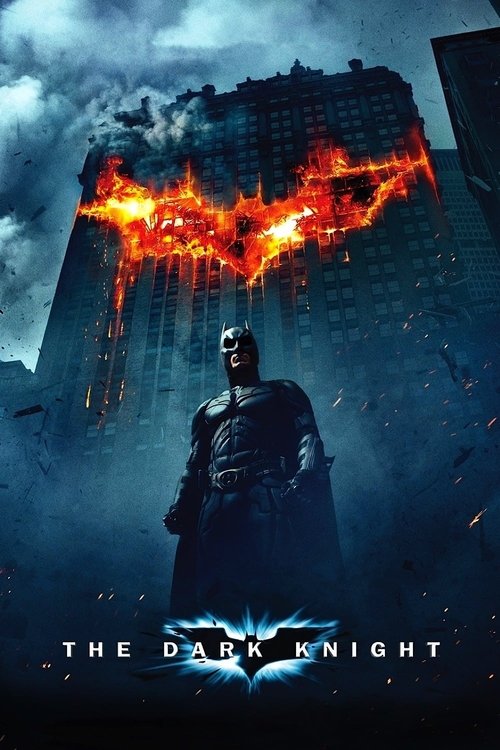
Joaquin Phoenix won the 2020 Best Actor Oscar for his performance — the second time in history a comic-book performance has won an acting Oscar (the first was Heath Ledger's posthumous Best Supporting Actor for The Dark Knight (2008), exactly twelve years earlier).
Robert De Niro plays Murray Franklin — the late-night host who mocks Arthur on television. The casting is a direct callback to De Niro's own role as Rupert Pupkin in Martin Scorsese's The King of Comedy (1983), where De Niro played an unhinged would-be comic. Todd Phillips called the casting his single biggest creative coup.
Joker is deliberately set in 1981, decades before Bruce Wayne becomes Batman. The setting establishes Joker as the original Gotham criminal who inspires the larger world that produces Batman. The film does not directly connect to any other Joker continuity.
Arthur's dance down the Gotham staircase — to Gary Glitter's 'Rock and Roll Part 2' — became one of the most-referenced single images of 2019. The Bronx staircase used for the scene became a tourist destination.
Arthur's killing of three Wall Street brokers on the subway car was the film's defining tonal moment — the moment he discovers his own capacity for violence. The scene was widely cited as the film's most-effective dramatic sequence.
Joaquin Phoenix reportedly lost 52 pounds for the role of Arthur Fleck — a deliberate physical transformation to capture the character's emaciated, fragile appearance. Phoenix's commitment to the role was widely cited as a major factor in his Oscar win.
When Arthur visits Sophie's apartment in the third act, she does not recognize him. The entire relationship — every date, every supportive moment — was Arthur's hallucination. The film deliberately uses the unreliable-narrator structure throughout.
The film's reframing of Thomas Wayne — Bruce Wayne's father — is unusual. Wayne is portrayed as a corrupt corporate magnate running for mayor, not the traditional sympathetic philanthropist. The character is killed by an Arthur-inspired Joker follower in the streets of Gotham.
The brief scene where young Bruce Wayne stares at Arthur through the gate at Wayne Manor was filmed in a single take. The connection between Joker's eventual identity and Bruce's foundational trauma was kept ambiguous; the film never confirms whether Arthur and Thomas Wayne were actually related.
The film's climactic riot scenes in downtown Gotham used over 1,000 extras. The scenes were widely cited as some of the most-elaborate practical-effects crowd sequences in any 2019 film.

💬 Reader Comments