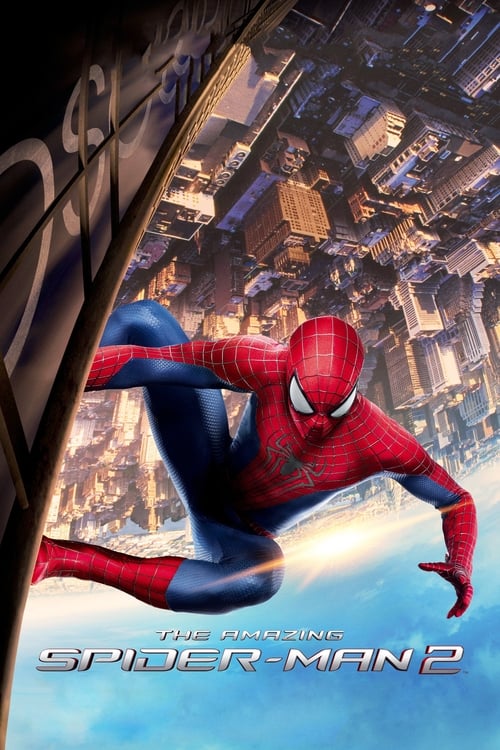
The Amazing Spider-Man 2 (2014) is a superhero film adapted from Marvel Comics, directed by Marc Webb and starring Andrew Garfield and Emma Stone. The film is part of the Sony Spider-Verse and was released by Sony Pictures. Runtime: 2h 22m. Rated PG-13. Audience rating: 6.6/10.
What is The Amazing Spider-Man 2 (2014) about?
Peter Parker faces multiple threats — the electricity-powered Electro and his old friend Harry Osborn becoming the Green Goblin — while uncovering the truth about his parents.
Released in 2014, The Amazing Spider-Man 2 was directed by Marc Webb and produced under the Sony Pictures banner. The film occupies a significant place within the Sony Spider-Verse — contributing to the ongoing narrative and mythology of that cinematic universe.
The film features lead performances from Andrew Garfield, Emma Stone, Jamie Foxx, among others, anchoring a story that adapts characters first brought to life in Marvel Comics. Its source material gives the film a foundation rooted in decades of published storytelling, which Webb and the creative team interpret through a cinematic lens.
Its 6.6 rating reflects a film that divided audiences — appreciated for its ambition and spectacle by some, criticized for pacing and execution by others. Its place in the genre remains a frequent discussion point.
What happens in The Amazing Spider-Man 2 (2014)? — Full Plot
Cold open. A private corporate jet in 2000, en route from New York to a classified Oscorp research facility. Richard Parker (Campbell Scott), Peter Parker's biological father, is in the back of the plane recording a final video confession on a Sony Handycam. He's explaining to his unborn son why he and his wife Mary had to disappear from their lives years ago. He had been Oscorp's chief geneticist on the cross-species Decay Rate Algorithm. He had refused Norman Osborn's order to weaponize the algorithm for biological warfare. Norman had attempted to have Richard killed. Richard and Mary had fled, leaving four-year-old Peter with Ben and May Parker for safekeeping. Then the plane's pilot — actually an Oscorp-paid assassin — emerges from the cockpit and attacks Richard. The pilot has been instructed to kill the Parkers and stage it as a hijacking. Richard fights him in the aisle. The pilot pulls a gun. The plane begins descending. Richard's video records his last broadcast and the camera goes black. The plane crashes into the Pacific Ocean. Richard and Mary die in 2000. The opening prologue retroactively explains what happened to Peter's parents in the first film's cold open.
Present day, New York. Peter Parker (Andrew Garfield, twenty-nine, with the now-famous side-parted hair) is approaching his Midtown Science high-school graduation. He's been Spider-Man for nine months. He has been dating Gwen Stacy (Emma Stone, blonde and brilliant) since the kiss at the end of The Amazing Spider-Man (2012) — but he keeps breaking up with her. He has been seeing the ghost of her father Captain George Stacy in mirrors and crowds, reminding Peter of the deathbed promise to stay away from Gwen. The promise has been impossible to keep. Peter, in mid-relationship anxiety, breaks up with Gwen the night before graduation. Gwen, hurt but stoic, gives her valedictorian speech at the ceremony anyway. Peter swings in on a Spider-Man web through Manhattan to make it to the ceremony five minutes late, in cap and gown over the Spider-Man suit. He sits in the back row. Gwen sees him. She acknowledges him from the podium.
Times Square attack. Three days later, Peter is at the Daily Bugle selling photographs. The Bugle's media office is interrupted by a citywide blackout — the New York Power Authority has lost the entire Manhattan grid. A single individual — a glowing, blue-skinned, levitating man made of pure electrical current — is broadcasting from the center of Times Square. He's known as Electro. His real name is Max Dillon (Jamie Foxx), and he's a former Oscorp electrical engineer who was electrocuted in an accident at the Oscorp generator facility. The eels in the lab's bioengineering tank — genetically modified electric eels — bit and electrocuted Max simultaneously, transforming his body into a living electrical current that can fly, pulse-fire energy, and command every electrified system on Earth. Max is initially confused — he's the kind of socially awkward employee who has been ignored by his Oscorp colleagues for years. He'd been a Spider-Man fan. He's now causing accidental panic in Times Square by being unable to control his electrokinesis.
Spider-Man and Electro. Peter swings into Times Square to subdue Electro. Initially he tries to talk Max down with kindness — Max, in the early seconds, is grateful that Spider-Man is acknowledging him by name. "Spider-Man knows my name!" Then NYPD opens fire on Electro from a police helicopter. Electro panics, retaliates with a citywide electrical blast, and turns on Peter, believing Spider-Man set him up. Peter, with Gwen Stacy's lab-coat technical help radioed in from a nearby Empire State Building substation, defeats Electro by short-circuiting his electrical core with a high-pressure water blast. Electro is locked in a custom-built copper-lined holding cell at the Ravencroft Institute for the Criminally Insane.
Harry Osborn returns. Peter's best friend Harry Osborn (Dane DeHaan, blond, gaunt, weeks from death) has just returned to New York to take over Oscorp after the death of his father Norman. Norman died of a hereditary genetic disorder — Retroviral Hyperplasia — that runs in the Osborn male line. Harry, twenty-one years old, has just been diagnosed with the same condition. He has weeks to live. Norman, in his last conversation with his son, mentions that the only cure is Oscorp's classified Cross-Species Genetics research — the same project Richard Parker had been working on at Oscorp twelve years earlier. Harry, now Oscorp CEO, decides to find Spider-Man because Spider-Man's blood — irradiated with the same genetic-modification compound from Peter's spider bite — is the only known sample of stable cross-species DNA on Earth.
Harry asks Peter for Spider-Man. Harry, at his Manhattan rooftop penthouse, asks Peter to help him reach Spider-Man. He explains his disease. He explains his need for Spider-Man's blood. Peter, terrified that giving Harry his blood could trigger an uncontrolled mutation in his friend (Peter knows what spider-DNA-recombination did to him), refuses to help. He won't even agree to ask Spider-Man. Harry, sensing rejection, becomes desperate. He stages a corporate coup to remove himself from Oscorp's board (after the board, fearing his unstable mental state, has voted to suspend him as CEO). He breaks into Oscorp's classified Cross-Species vault and injects himself directly with the experimental cross-species venom Richard Parker had originally engineered. The venom doesn't stop his disease. It instead amplifies and accelerates the mutation. Harry transforms into a partially-mutated, partially-armored Green Goblin — green-skinned, fanged, with a deteriorating face but enhanced strength and speed. He's much more comics-Green-Goblin-faithful than Norman's version had been. He has been Peter's best friend his whole life and is now his most dangerous enemy.
Richard's hidden lab. Peter, investigating Norman Osborn's secrets after Harry's transformation, follows clues to a hidden Oscorp-funded subway laboratory at an abandoned 50th Street IRT station. Inside, he finds his father Richard Parker's actual research lab, abandoned since 2000. The lab still contains Richard's research notes, prototypes, and a personal hidden video confession that explains his disappearance — Norman Osborn had tried to weaponize the Decay Rate Algorithm. Richard had refused. Norman had killed Richard. Peter watches his father speak to him for the first time. The lab also contains Richard's old radio-receiver transmitter — Peter realizes Spider-Man's web fluid has been an unwitting extension of Richard's original research. Peter has been carrying his father's legacy in his web cartridges for two years.
Harry breaks Electro out. Harry-as-Goblin breaks into the Ravencroft Institute and offers Electro a deal: in exchange for the world's largest electrical infrastructure (Oscorp's entire grid), Electro will help Harry kill Spider-Man. They agree. Electro short-circuits the prison's containment field. The two of them — Goblin in the air, Electro on the ground — escape and converge on a Manhattan electrical substation in midtown.
Final battle, Brooklyn Bridge clock tower. Peter and Gwen have reconciled the day before the climax. Gwen has applied to and been accepted by Oxford University's chemistry program — she's leaving New York at the end of summer. Peter and Gwen are at Brooklyn Bridge that night when Electro arrives at the substation atop the bridge to amplify himself across the city's entire grid. Spider-Man fights Electro across the Brooklyn Bridge clock tower while Gwen, in chemistry expertise, deduces that Electro's electrical structure can be destabilized by causing him to overload — by feeding him too much electrical current at once. She rigs the substation to discharge a feedback loop directly into Electro's body. Electro overloads and disintegrates in a flash of light.
Then the Goblin. Harry-as-Goblin arrives at the bridge tower mid-victory celebration. He's grown weaker from his disease but the Goblin's accelerated metabolism has stabilized him for the moment. He spots Gwen in Peter's arms. He recognizes her from school. He attacks her. The fight tears the bridge clock tower apart. Harry, in armored Goblin suit, hits Gwen with a Goblin-glider blade and lifts her by the throat off the floor of the clock tower's gear-room. Peter swings in to fight Harry directly. The fight tumbles through the bridge tower's massive clockwork gears — fifty-foot-tall mechanical clock-gears spinning above an empty drop into the East River below. Harry shoves Gwen off a clock-gear platform mid-fight. Gwen falls.
The fall. The scene Andrew Garfield has reenacted in two films as redemption. Gwen Stacy falls from the clock-tower platform, a fifty-foot drop into the bridge's empty internal shaft. Peter, in costume, fires a web from his wrist at Gwen mid-fall. The web catches Gwen's body. The web sticks. Peter pulls. But the web has caught Gwen a microsecond too late. The whip-back motion of the rescue snaps Gwen's neck against the web tension. Peter lands at the bottom of the clock tower holding Gwen's body. She's lifeless. The film, in a single beat that stuns the audience, ends Gwen Stacy's life. Peter cradles her on the stone floor. The Spider-Man theme is gone. The score is silent. Peter screams into the bridge wall. Gwen Stacy is the first major superhero girlfriend to be killed onscreen as a permanent character death in modern superhero cinema.
Aftermath. Peter spends the next six months in mourning. He stops being Spider-Man. He stops going to the Daily Bugle. He stops responding to texts. He visits Gwen's grave at the Forest Hills Cemetery every week. Aunt May has been working two shifts as a nurse to make rent. New York is grieving. Spider-Man is missing.
Return. Six months after Gwen's death, Peter is at the cemetery on his weekly visit when he hears a Manhattan-wide news broadcast about a heavily-armed mercenary with a mechanical rhino-suit driving a stolen tank through downtown Manhattan. The mercenary is Aleksei Sytsevich (Paul Giamatti, in heavy Russian-accent mode) wearing an Oscorp-built mechanical Rhino exo-suit. Sytsevich has been hired by an unknown party to draw Spider-Man out into the open. Peter, watching the news on a TV in the cemetery lobby, listens to the recorded audio of Gwen Stacy's valedictorian speech that's been playing on the morning radio — her words about hope, her words about Peter, her words about why heroes matter. Peter wipes his face. He suits up. He webs his way down Fifth Avenue toward midtown Manhattan. He arrives at the stand-off scene where Rhino is rampaging through a school zone with a tank rifle. A small boy in a Spider-Man costume — eight years old — has stood in front of Rhino's tank in the boy's father's protective tackle, holding his arms wide and refusing to move. Rhino is about to fire on the kid. Spider-Man drops from the sky. "Move along, son. I got him now." The film closes on Spider-Man, in costume, in mid-leap toward the Rhino's chest. Cut to black. Cut to credits.
Post-credits. The post-credits scene of The Amazing Spider-Man 2 was the lawyer's office at Ravencroft Institute where Gustav Fiers (the mysterious figure who'd been pulling strings from the shadows throughout the film, played by Michael Massee, the actor whose accidental gun discharge had killed Brandon Lee in 1993) was supposed to introduce the Sinister Six lineup. The scene was cut from the theatrical release after the Sony Pictures hack revealed Sony's plans had collapsed. The film's official theatrical version cuts to credits at Spider-Man's leap toward Rhino.
Who stars in The Amazing Spider-Man 2 (2014)?
Find The Amazing Spider-Man 2 (2014) on Amazon
Watch The Amazing Spider-Man 2 on Prime Video, browse the original Marvel Comics source material, and discover Blu-rays, soundtracks, and related merchandise on Amazon.
As an Amazon Associate, I earn from qualifying purchases. Link clicks do not affect editorial coverage — see our disclaimer.
What are some facts about The Amazing Spider-Man 2 (2014)?
The Amazing Spider-Man 2 released in 2014, placing it within the 2010s era of comic book cinema — a decade that saw superhero films become the dominant force at the global box office.
Directed by Marc Webb, the film was produced by Sony Pictures and adapts source material from Marvel Comics.
The principal cast features Andrew Garfield and Emma Stone, with key supporting roles played by Jamie Foxx, Dane DeHaan, Paul Giamatti.
The film belongs to Sony Spider-Verse — Sony Pictures' Spider-Man adjacent film universe.
The Amazing Spider-Man 2 carries an audience rating of 6.6 — a middling reception but one that hasn't prevented its cultural footprint.
The Marvel Comics source material for The Amazing Spider-Man 2 has been in continuous publication for decades, giving filmmakers a rich well of storylines, character arcs, and iconography to draw upon.
Modern superhero films like this one use a mix of practical effects and digital VFX, with entire sequences often shot against volume walls or LED stages pioneered by shows like The Mandalorian.
The Amazing Spider-Man 2 is catalogued on Movies on Comics among our collection of 164 comic book films spanning 48 years of cinema — from Richard Donner's 1978 Superman to the present day.
Easter Eggs & Hidden Details in The Amazing Spider-Man 2 (2014)
Marc Webb's sequel ends with Gwen Stacy's death. The deep cuts include Garfield-Stone real-life chemistry and the franchise's first explicit Spider-Verse setup.
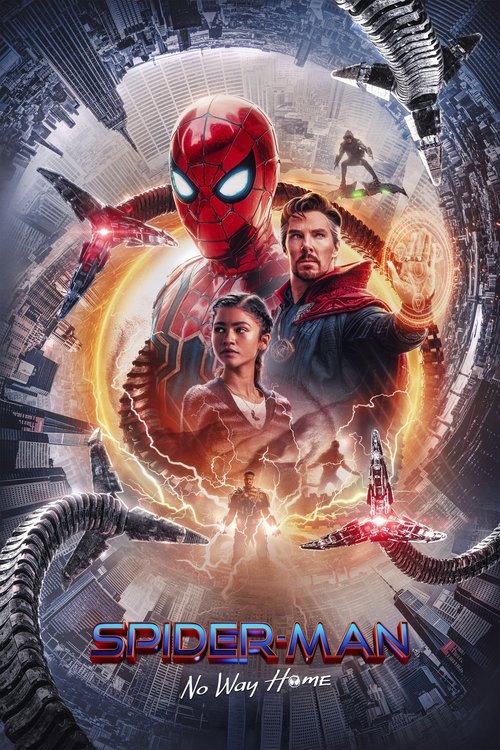
Gwen Stacy's death — Peter unable to save her despite catching her with a web — was directly adapted from The Amazing Spider-Man #121-122 (1973), one of the most-controversial deaths in comic-book history. The scene was widely cited as the franchise's most-emotional sequence. The scene was directly mirrored in No Way Home (2021) when Garfield's Peter catches MJ.
Andrew Garfield and Emma Stone — Peter and Gwen — were real-life romantic partners during the filming of both Amazing Spider-Man films. Their on-screen chemistry was widely praised. The relationship ended publicly in 2015.
Jamie Foxx's Electro — Max Dillon, a schlubby electrical engineer — required the franchise's most-CGI-heavy character design. The character's blue luminescent body was created with electroluminescent-painted suits for the actor combined with extensive post-production CGI.
Dane DeHaan's Green Goblin — Harry Osborn, played as a fragile, dying teen — was the franchise's first explicit teen Goblin portrayal. DeHaan's commitment to the character's psychological breakdown was widely praised.
The Amazing Spider-Man 2 was meant to launch a Sinister Six spin-off and additional Amazing Spider-Man films. The franchise's underperformance led Sony to abandon the planned series. Andrew Garfield returned only in No Way Home (2021).
Paul Giamatti's Rhino — Aleksei Sytsevich — appears only briefly in the film's epilogue. The character was meant to be a major villain in the planned Sinister Six film. The casting was widely covered but the role never expanded.
The film's behind-the-scenes setup — particularly the abandoned multi-film plan — was the franchise's first explicit Spider-Verse reference. The eventual Into the Spider-Verse (2018) animated trilogy retroactively justified the planned Spider-Verse expansion.
Sally Field's Aunt May had significantly reduced screen time compared to her predecessor Marisa Tomei would have in Homecoming (2017). The choice was widely cited as a deliberate franchise-focus shift away from the Aunt May character template.
The film's clock-tower fight — Peter and Harry's confrontation at the moment of Gwen's death — directly recreates the Gwen Stacy death sequence from The Amazing Spider-Man #121 (1973). The cinematography was deliberately matched to the comic panels.
The Amazing Spider-Man 2 grossed $709 million globally on a $200 million budget — slightly below the original. The commercial decline directly led to Sony's abandonment of the Andrew Garfield Spider-Man universe.
💬 Reader Comments